Speakers 2026
Keynote Speaker Ⅰ

Prof. Linxue Li
Tongji University, China
Biography Sketch: Professor Linxue Li tries to establish his architectural teaching, research, practice and international exchange based on a definite theory system. The mainstream of theory lies on the basis of studying thermodynamic ecological systems, exploring new paradigms of interaction between energy and architectural noumenon, and the carrier of urban high-rise complex building topology. He tries to become one of the most important participants in ecological architectural research and contemporary urban architecture research through collaboration with advanced teams such as the GSD at Harvard University. Meanwhile, as the principal of ATELIER L+, TJAD, he has been responsible for many influential projects such as Hangzhou Civic Center, Sichuan International Tennis Center, and ect, under the strategy of practice as "systematic construction". Through winning of nearly twenty awards at home and abroad, and participating in many exhibitions and forums, he has become one the important interpreters for the Chinese contemporary architecture.
Speech Title: TBD
Abstract: TBD
Keynote Speaker Ⅱ
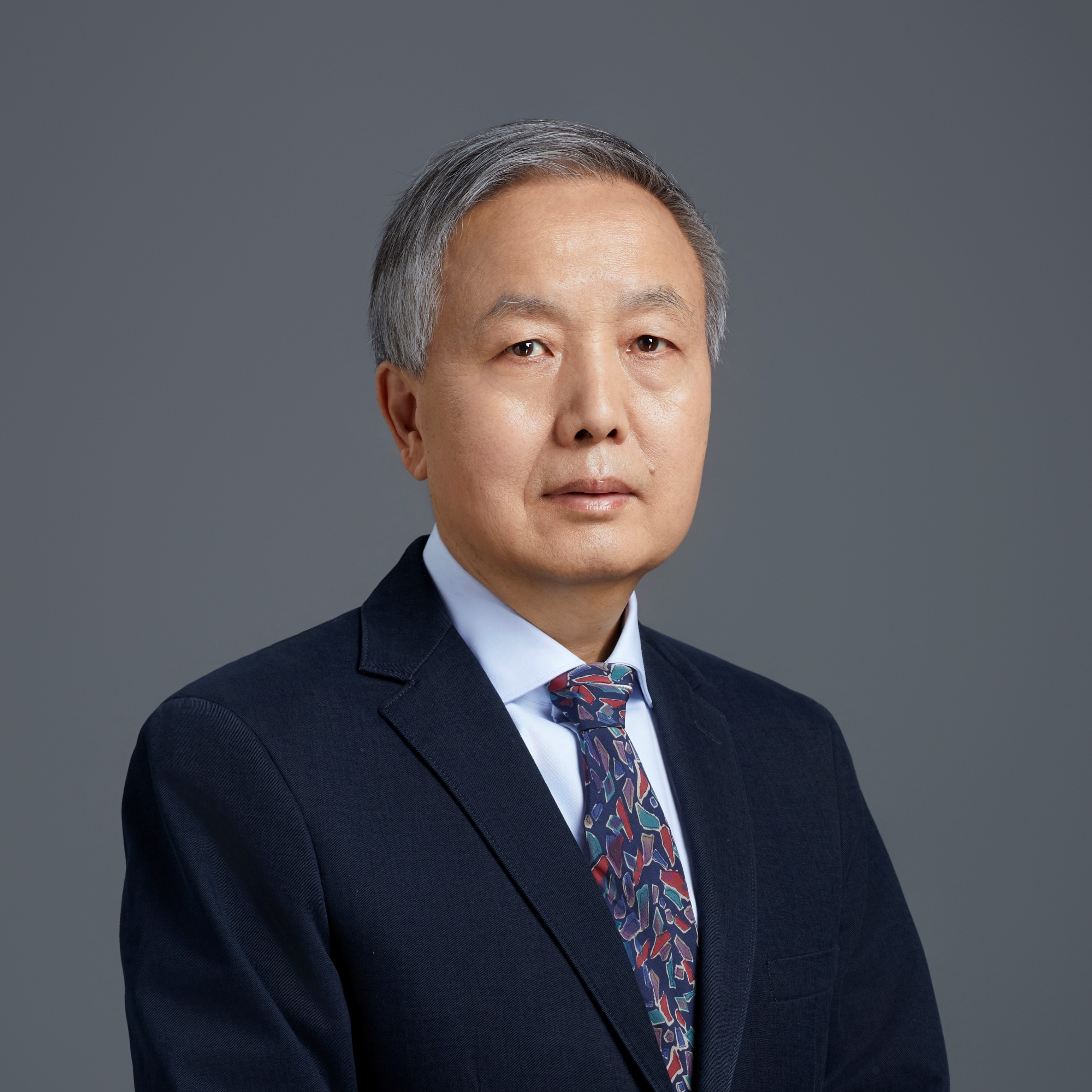
Prof. Jie Zhang
Tsinghua University, China
Biography Sketch: Zhang Jie is a professor and architect in the field of heritage conservation and urban regeneration at Tsinghua University. He is a Chartered Member of RIBA, an Honorary Membership of ICOMOS and a chairholder of the UNESCO on Heritage Conservation Planning and Sustainable Social Development.
Prof. Zhang Jie's research lies in the inter-discipline of architecture and conservation and in investigating a sustainable development model for cities undergoing drastic changes, considering culture, ecology, economy, and community improvement in the context of rapid urbanization.
He has published 20 academic monographs and more than 100 academic papers. He has won Award of Distinction and Award for New Design in Heritage Contexts in UNESCO Asia-Pacific Awards for Cultural Heritage Conservation, RIBA International Awards for Excellence, Merit Award for Urban Design from American Institute of Architects (AIA), German Design Award (Gold), DNA Paris Design Award, in addition to other highly regarded awards from Japan, Portugal, Canada, and Switzerland by his representative works, including Conservation of Sanfang Qixiang, Jingdezhen Taoxichuan Industrial Park, Jingdezhen Pengjia Alley Compound and Tsinghua University Nankou National Key Laboratory Base.
His works were displayed in the Chinese Architecture Exhibition of the 27th World Congress of Architects, the China Pavilion at Venice Biennale 2020, and China Architecture exhibition in Lyon, France.
Speech Title: Urban Ecological-Cultural Conservation and Synergistic Development: A Study on Jinan, the City of Springs
Abstract: Facing the contemporary demand to harmonize the conservation of historic cities with modern developments in China, this speech takes Jinan, the City of Springs, as a case study to explore the theoretical and technical approaches to combine protection of urban ecology with culture.
This study innovatively proposes a theory of "ecology-culture" community of life, which intertwines water management and urban development with the natural ecological cycle of cold springs. It elucidates the tripartite internal correlation mechanism of "spring pathways, hydrological cycle, and spring settlements."
Furthermore, it presents a comprehensive technical pathway—encompassing high-precision identification, dynamic monitoring, three-dimensional control, and optimal allocation and enhancement—to protect the "Spring-City" system and coordinate urban construction projects.
This approach has successfully supported the systematic ecological conservation of Baotu Spring basin covering an area of 1,660 square kilometers, the revitalization of spring settlements, and the site selection and construction of major infrastructure, such as the subway system traversing the spring recharge area. Ultimately, it provides a scientific paradigm for the protection and sustainable development of historic cities situated in complex geo-environments.
Invited Speaker Ⅰ
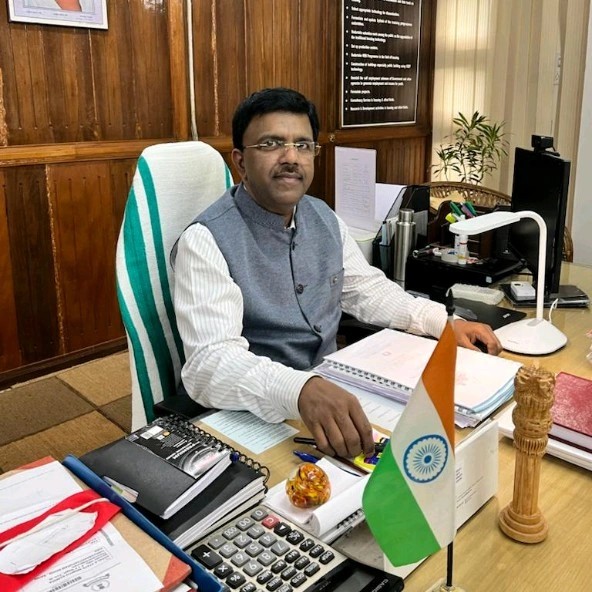
Dr. Febi Varghese
Director & CEO
Kerala State Nirmithi Kendra, India
Biography Sketch: Dr. Febi Varghese is a highly accomplished professional with a distinguished career in Engineering, Management and Corporate Governance. His contributions and achievements are a testament to his dedication and expertise. Dr. Varghese is indeed a multifaceted personality and his attainments and contributions are truly impressive. His expertise has been recognized both nationally and internationally. Dr. Febi has held various leadership positions, including: - Director: Coir Board of India, Ministry of MSME, Govt. of India - Financial Analyst: United Nations - Chairman & Managing Director: Travancore Cements - Managing Director: Kerala Minerals and Metals (KMML), - Managing Director: Kerala State Industrial Enterprises Ltd (KSIE) & Kerala Soaps and Oils. - Managing Director: KERAFED & Kerala State Coconut Development Corporation - Managing Director: Kerala State Coir Corporation Ltd & Metropolitan Engineering Co.
Dr. Varghese has achieved numerous successes, including: - Turning around KMML, KSIE, KESNIK and KERAFED, leading to record turnover and profit - Introducing 3D Printing Building Technology to the State, for the first time - Holding a Patented product and authoring several books and Papers on Management and Engineering - Achieving record-breaking performance in various organizations - Receiving the Management Excellence Award. His impressive credentials include: - Doctorate in Management Studies (Ph.D)- Postgraduate degrees in Engineering (M.Tech- 1st Rank) & Business Administration (MBA) - Graduate degree in Engineering (B.Tech- 6th Rank) & Law (LLB) - Executive Development Programme on Corporate Governance from IIM - Advanced Productivity Tools & Techniques from APO, Japan. Dr. Febi is also a Registered Independent Director (Ministry of Corporate Affairs, GoI), Visiting Professor at Turin University, Italy and Nile University, Egypt, Regd. Professor of Practice, UGC, Chartered Engineer, Fellow of both the Institution of Engineers and the Indian Institution of Technical Arbitrators and Arbitrator of Kerala High Court. He is currently the Director & CEO of Kerala State Nirmithi Kendra, a govt. The institution responsible for implementing housing and infrastructure projects. Dr. Febi is a highly respected and accomplished individual with a wide range of expertise and achievements and has over 30 years of professional experience, making him a respected expert in his field.
Speech Title: Next-Gen Building Technology: The Role of Generative AI in Design and Construction
Abstract: Generative Artificial Intelligence (AI) is rapidly transforming building technology by redefining design methodologies, construction workflows, and lifecycle management within the architecture, engineering, and construction (AEC) industry. This paper presents emerging insights into the application of generative AI for performance-driven building design, emphasizing its capability to autonomously generate and evaluate multiple design alternatives based on criteria such as energy efficiency, structural performance, and material optimization.
The study examines the integration of generative AI with Building Information Modeling (BIM), digital twins, and intelligent construction systems, enabling real-time simulation, predictive analytics, and informed decision-making. Key advancements include automated design iteration, intelligent space planning, and adaptive building systems. However, challenges such as data dependency, algorithmic bias, high computational demands, and the need for interdisciplinary expertise remain significant.
Looking ahead, the paper provides foresight into the convergence of generative AI with emerging technologies such as Internet of Things (IoT), robotics, and augmented reality, which are expected to enable fully autonomous and self-optimizing buildings. The research concludes that generative AI will play a pivotal role in creating resilient, sustainable, and human-centric built environments, while necessitating new regulatory frameworks and interdisciplinary collaboration